
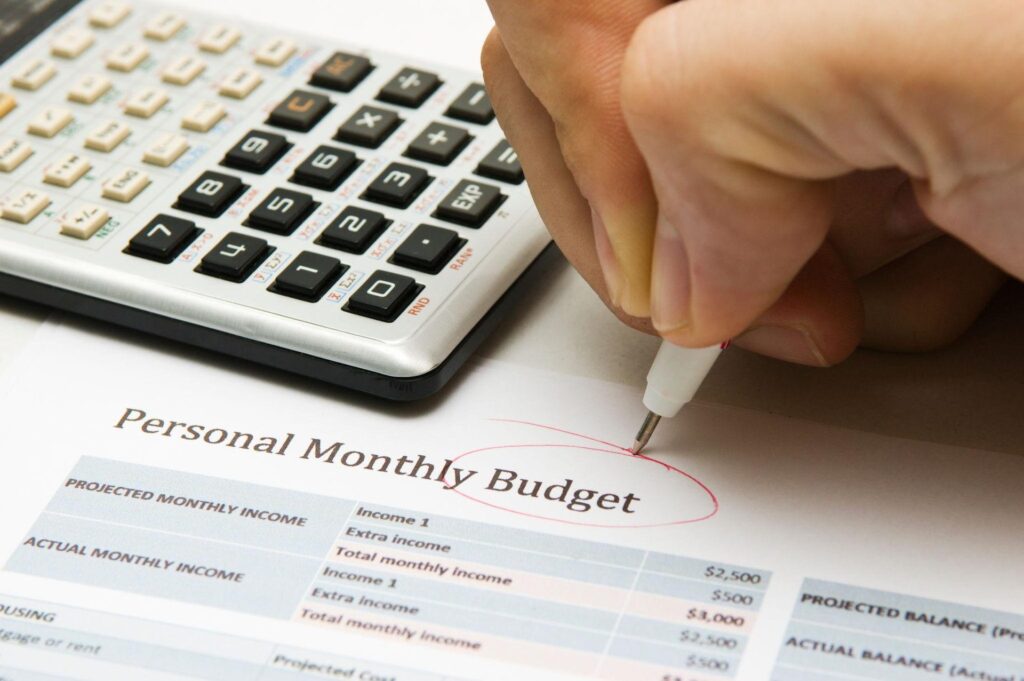
Monthly Budget Calculator
Compare your income and expenses to see exactly where your money goes each month.
Enter Your Budget Details
See your leftover, your savings rate, and how you compare to the 50/30/20 rule.
Monthly Expenses
How your spending maps to the 50/30/20 rule
| Bucket | You spend | Your % | Target |
|---|
This calculator provides budget estimates for general education, not financial advice. The 50/30/20 split is a popular guideline — adjust it to fit your real life, especially in high-cost areas. Minimum debt payments are counted as “needs”; any extra you pay is really savings toward your future.
By Victoria Hart · Published June 14, 2026 · Last Updated June 15, 2026 · Reading time: 12 min
Budget Calculator: Build a 50/30/20 Budget in Minutes
Most budgets fail because they’re complicated. This free budget calculator keeps it simple: enter your monthly income and your expenses by category, and it instantly shows what’s left over, your savings rate, and how your spending compares to the popular 50/30/20 rule (50% needs, 30% wants, 20% savings). No spreadsheet required.
How to Use This Budget Calculator
- Enter your monthly income — your take-home pay after taxes (not your gross salary). Not sure of the number? Run it through our Paycheck Calculator first.
- Fill in your monthly expenses by category — housing, utilities, transportation, groceries, debt payments, savings, and anything else. Estimates are fine; you can refine them later.
- Hit Calculate to instantly see what’s left over, your savings rate, and how your spending stacks up against the 50/30/20 rule.
How to Read Your Results
The calculator gives you three things at a glance:
- Left Over — your income minus all expenses. Positive means you still have money to assign (send it to savings or debt!). Negative means you’re spending more than you earn. Zero means every dollar has a job — a complete budget.
- Savings rate — the share of your income going to savings and investing. A healthy target is 20% or more.
- Your 50/30/20 breakdown — the tool automatically groups your categories into three buckets and compares them to the popular rule:
- 50% Needs — housing, utilities, transportation, groceries, and the minimum payments on your debts.
- 30% Wants — dining out, streaming, hobbies, travel, shopping (your “Other Expenses”).
- 20% Savings & Debt Payoff — emergency fund, retirement, investments, and any extra debt payments beyond the minimums.
The beauty of the rule is its simplicity. You don’t track 40 categories — you just keep three buckets roughly in balance.
Needs vs. Wants: The Line That Trips Everyone Up
The hardest part of budgeting isn’t the math — it’s being honest about which bucket something belongs in. A few rules of thumb:
- A need is the basic version; the upgrade is a want. Groceries are a need; frequent takeout is a want. A phone plan is a need; the newest phone on a payment plan is partly a want.
- If skipping it for a month wouldn’t cause a real problem, it’s probably a want. Your electric bill? Need. Your three streaming subscriptions? Wants.
- Minimum debt payments are needs; extra payments are savings. The minimum keeps you out of trouble (need). Paying more builds your future (the 20% bucket).
Being honest here is what makes the rule actually work. Most people’s budgets break because too many “wants” quietly get filed as “needs.”
Fixed vs. Variable Expenses: Know the Difference
There’s another way to slice your spending that makes budgeting far easier — sorting it into fixed and variable expenses:
- Fixed expenses stay roughly the same every month: rent or mortgage, car payment, insurance, loan payments, subscriptions. They’re predictable, which makes them easy to plan around — but also easy to forget you signed up for.
- Variable expenses change month to month: groceries, gas, utilities, dining out, shopping. This is where most of your flexibility lives — and where small changes add up fastest.
Here’s why it matters: when money’s tight, you can’t do much about fixed costs in the short term (you can’t lower your rent this week). But variable costs are where you have real control today. Trimming $40 a month from dining out or groceries is far more realistic than breaking a lease. For a deeper breakdown, see our full guide on Fixed vs. Variable Expenses.
A Real Example
Let’s say Jordan brings home $3,000 a month after taxes. He enters his expenses: $1,000 housing, $200 utilities, $300 transportation, $400 groceries, $200 debt payments, $400 savings, and $300 on other/fun.
The calculator shows:
| Result | Amount |
|---|---|
| Total expenses | $2,800 |
| Left over | $200 |
| Savings rate | 13% |
And the 50/30/20 check: Needs 70% (target 50%), Wants 10% (target 30%), Savings 13% (target 20%). In one glance Jordan can see his needs are running high — likely his housing — and his savings are a little short of the 20% goal. That’s a clear, fixable picture he’d never get from a single “total” number.
Common Budgeting Mistakes I Saw Again and Again
After years at the IRS, I saw how people’s money really worked behind the scenes — and the same budgeting mistakes came up constantly. Here are the big ones:
- Budgeting off gross pay instead of take-home. People build a budget around their salary, then wonder why they’re always short. You can only spend what actually hits your account — always budget off your net pay.
- Treating savings as “whatever’s left over.” Left over is almost always nothing. The people who actually built savings did it the opposite way: they moved the 20% out first (automatically), then lived on the rest.
- Forgetting the irregular bills. Car registration, annual insurance, holidays, the surprise dental bill — these wreck budgets because they’re not monthly. Set aside a little each month so they don’t blow up a category when they hit.
- Mislabeling wants as needs. This is the quiet budget-killer. When “needs” creep past 50%, it’s usually wants in disguise. An honest category check fixes more budgets than any spreadsheet.
- Quitting after one bad month. A budget isn’t a test you pass or fail — it’s a steering wheel. Overspent this month? Adjust and keep going. The people who succeed are simply the ones who didn’t stop.
How to Adjust the 50/30/20 Rule for Your Life
The 50/30/20 split is a starting point, not a law. Real life varies:
- High cost-of-living area? If rent alone eats 40% of your pay, a strict 50% for all needs may be impossible. Many people in expensive cities run more like 60/20/20 — and that’s okay. The goal is awareness, not perfection.
- Aggressively paying off debt? You might temporarily flip to 50/20/30, throwing extra at debt until it’s gone.
- Lower income? When money’s tight, even 10% to savings is a real win. Start where you can and increase it as your income grows.
Use the targets as a mirror, not a cage. The point is to see your money clearly and make intentional choices.
How to Cut Monthly Expenses (the Quickest Wins)
If the calculator showed your spending running over your income — or you just want to free up cash for savings — start with these high-impact moves. They target the variable and forgotten costs first, because that’s where the easy money hides:
- Audit your subscriptions. Streaming, apps, memberships, that free trial that started charging — most people are paying for at least one they forgot about. Cancel what you don’t use this month.
- Tackle the “big three” needs. Housing, transportation, and food are most of your budget. You won’t move rent overnight, but a cheaper phone plan, a lower insurance quote, or one less takeout night per week adds up fast.
- Plan groceries before you shop. A quick list and a rough meal plan cut both impulse buys and food waste — often $50–$100 a month.
- Negotiate your recurring bills. Internet, phone, and insurance are often negotiable. A 15-minute call asking for a better rate (or threatening to switch) frequently works.
- Build a 24-hour rule for “wants.” For any non-essential purchase, wait a day. Half the time the urge passes — and that’s instant savings.
For a full walkthrough, see our guide on Simple Ways to Reduce Monthly Expenses. Even trimming 5–10% from your variable spending can be the difference between a budget that’s underwater and one that hits the 20% savings goal.
What I Learned Reviewing Taxpayer Finances
During my years working with taxpayers at the IRS, one thing became clear: financial struggles rarely came from a single huge mistake. Far more often, they were the result of dozens of small spending decisions that quietly added up over time — the forgotten subscription, the creeping grocery bill, the “just this once” purchases that became a habit.
The households that consistently stayed on track weren’t necessarily the highest earners. They were the ones who simply knew where their money was going and were willing to adjust when life changed — a new baby, a move, a job switch, a rough month. They treated their budget as a living thing, not a one-time setup.
That’s the entire purpose of a tool like this one. It’s not about judging your spending or forcing you into someone else’s rules. It’s about giving you a clear, honest picture so you can make small, intentional adjustments — the kind that, over months and years, quietly add up to real financial stability.
Frequently Asked Questions
Should I use gross or net income for the 50/30/20 rule? Net (take-home) income — the amount after taxes that actually reaches your bank account. Budgeting off gross pay is the single most common mistake.
What if my needs are more than 50% of my income? That’s common, especially in high-cost areas. Treat 50% as a target to work toward, not a pass/fail line. Trim wants first, look for ways to lower fixed costs, and grow income over time.
Do minimum debt payments count as needs or savings? Minimum payments are needs (they keep you current). Any extra you pay beyond the minimum counts in the 20% savings-and-debt bucket, because it’s building your financial future.
Is 50/30/20 better than a detailed budget? For most people, yes — because they’ll actually stick with it. A simple budget you follow beats a perfect one you abandon. You can always get more detailed later.
How often should I check my budget? A quick monthly review is plenty. Compare your real spending to your targets, adjust, and move on. It takes about ten minutes once you’re in the rhythm.
How much should I have in savings? A common first goal is a starter emergency fund of about $1,000, then building toward three to six months of essential expenses. The savings rate in this calculator helps you see whether you’re putting away enough to get there.
What’s a good savings rate? The 50/30/20 rule targets 20% of your take-home pay going to savings and debt payoff. If you’re not there yet, don’t worry — even 5% is a real start. Raise it a little each time your income grows.
Why is my “needs” percentage so high? Usually it’s housing. If your needs are well above 50%, your rent or mortgage is likely eating a big share of your income — common in high-cost areas. Focus on growing income and trimming variable costs rather than beating yourself up over the percentage.
Should I budget for irregular or annual expenses? Yes. Car registration, insurance renewals, holidays, and surprise repairs wreck more budgets than anything else. Estimate your yearly total, divide by 12, and set that aside monthly so it’s ready when the bill arrives.
Related Resources
Calculators:
- Paycheck Calculator — find your exact take-home pay first
- Savings Goal Calculator
- Debt Payoff Calculator
Articles:
- The 50/30/20 Budget Rule Explained
- Fixed vs. Variable Expenses
- Simple Ways to Reduce Monthly Expenses
About Everyday Money Tools
Victoria Hart is the writer behind Everyday Money Tools. She spent 8 years working for the IRS and 3 years preparing people’s taxes, giving her a real, behind-the-scenes look at how money works for everyday families. But her most important lessons came from her own life — as a single mom of three, she rebuilt her finances through some genuinely hard seasons, learning how to stretch a tight income, budget carefully, and find her footing again. Today she builds free financial calculators and writes clear, judgment-free money guides to help others do the same.